Scale a recipe between any two pans, with the ingredients that do not scale linearly called out.
Quick answer
Scaling an 8 inch round recipe to a 12 inch round means multiplying every ingredient by 2.25, taking the batter from 4.6 cups to 10.4 cups. Weigh rather than measure once the factor stops being a round number, and scale the leavening slightly under linear on large increases.
The formula
factor = target batter volume / original batter volume
The factor is the target batter volume divided by the original. Most ingredients scale straight through it. Three do not, and they are why a correctly multiplied recipe sometimes still fails.
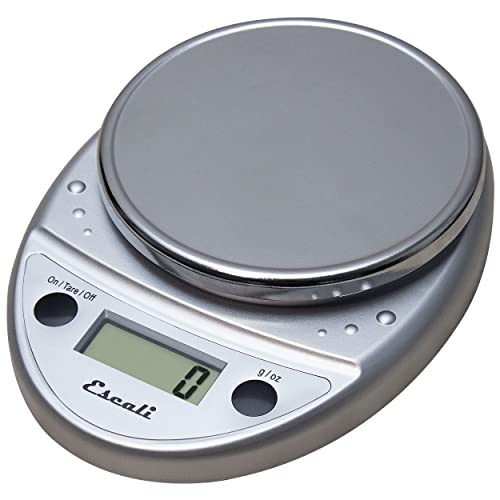
Chemical leavening needs proportionally slightly less on a large increase, because a bigger, deeper cake spends longer in the oven and the gas has more time to work. On a factor above about two, scale it at roughly 90 percent of linear. Eggs come in discrete sizes, so weigh beaten egg to hit the scaled number rather than rounding to the nearest egg. Pan preparation scales with surface area, not volume, so a much larger pan needs proportionally less greasing than the factor suggests.
Derived, published or convention?
The scale factor is DERIVED arithmetic. The leavening adjustment on large factors is TRADE CONVENTION rather than a published standard, and it matters most above a factor of two.
Scale factors from a standard 8 inch round, 2 inch deep recipe
Bake it in
Scale by
Batter (cups)
Flour from 240 g becomes
Party servings
6 in round
0.56
2.61
134 g
9
9 in round
1.27
5.87
305 g
21
10 in round
1.56
7.25
374 g
26
12 in round
2.25
10.44
540 g
37
14 in round
3.06
14.22
734 g
51
8 x 8 in square
1.27
5.91
305 g
21
9 x 13 in rectangle
2.33
10.81
559 g
39
12 x 18 in rectangle
4.3
19.95
1032 g
72
Derived from pan volumes. The 240 g flour column is a representative 8 inch butter cake, shown so the arithmetic is visible; use your own recipe with the same multiplier.
Gear for these numbers
These are rendered from the verified catalog and re-ordered against your numbers once you calculate.
The default decorating mixer: 10 speeds down to a stir that folds rather than throws, a 5 quart bowl rated for 9 cups of flour, and the tilt head that makes scraping a buttercream bowl quick.
Best for:the buy-once home mixer for cakes and buttercream
Amazon prices move often, so check before you buy.
Questions people ask
Can I just double a recipe instead of using an exact factor?
You can, and then you have the wrong amount of batter for the pan. Doubling an 8 inch round recipe gives 9.2 cups against the 10.4 cups a 12 inch round wants at a two thirds fill, so the layer comes out shallow. That is fine if you meant it, and a problem if the tier has to match another one.
Why does leavening not scale linearly?
Because a larger, deeper cake spends longer in the oven, so the leavening has more time to work before the structure sets. Scaled straight through, a big batch can rise too fast and then collapse, and some people read the excess as a faint soapy note. The convention is to scale it at roughly 90 percent of linear once the factor passes about two.
Is it better to scale up or to bake two batches?
Two batches, if your mixer bowl cannot comfortably hold the scaled volume. A bowl filled to the brim cannot be mixed properly and leaves streaks of unmixed flour, which is worse than any inconsistency between batches. Mixing twice and combining by hand is what a bakery would do and costs nothing but time.
How do I scale eggs accurately?
Weigh them beaten rather than counting them. A large egg is roughly 50 g out of the shell, but the variation between eggs is wide enough to matter on a small recipe scaled up. Crack more than you need into a jug, beat them together, and weigh out the scaled figure. The rest keeps for a day in the fridge.
This calculator does arithmetic on the numbers you give it. It does not know your oven, your recipe or
your altitude. Figures are labelled as derived, published or trade convention, and where no honest
figure exists the calculator says so instead of producing one. Researched guidance, not professional advice.