Quick answer
Split or curdled buttercream is almost always a temperature problem, not a ruined batch. If it looks curdled and grainy, it is too cold; warm a portion gently and beat it back in. If it looks soupy and thin, it is too warm; chill the bowl briefly, then rewhip. Almost nothing here is actually unrecoverable.
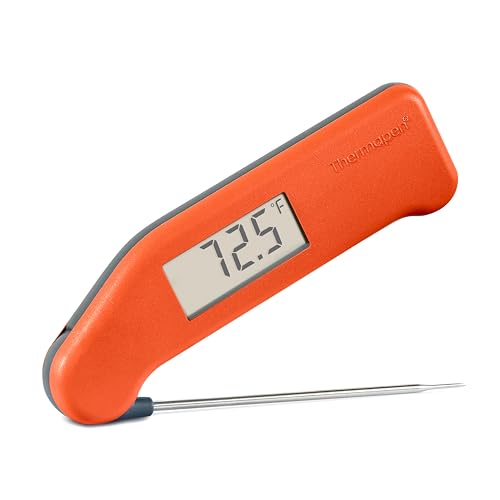
ThermoWorks Classic Thermapen Instant-Read Thermometer
The older Thermapen at a lower price, slower to read than the ONE but with the same probe accuracy, which is the part that matters for tempering.
Best for: accurate readings without the flagship price
Check price on AmazonButtercream that suddenly looks broken, whether that is a grainy, curdled mess or a soupy puddle that will not thicken, is one of the most common moments of panic in home baking, and it is also one of the easiest to fix. Splitting is nearly always a temperature problem rather than a ruined batch: butter and egg white or powdered sugar only emulsify cleanly within a fairly narrow temperature range, and stepping outside that range in either direction is what makes the mixture look wrong. Too cold and the butter seizes into hard flecks before it can blend in, which looks curdled. Too warm and the butter melts faster than it can trap air and liquid, which looks soupy.
This page covers the fix for both directions, whether the buttercream in question is Swiss meringue, American, or Italian style. For the full Swiss meringue method and why it naturally goes through a soupy-then-curdled stage on its way to smooth, see how to make Swiss meringue buttercream. For quantities, the buttercream batch calculator and the frosting quantity reference cover how much a given cake actually needs.
How do I tell whether my buttercream is too cold or too warm?
- Look at the texture. A curdled, grainy, slightly lumpy appearance, almost like cottage cheese, points to a mixture that is too cold. A thin, soupy, pourable texture that refuses to thicken points to one that is too warm.
- Feel the outside of the mixing bowl. If the bowl feels cool or cold to the touch, the buttercream inside is very likely too cold to emulsify. If the bowl feels warm, particularly after a warm kitchen or a lot of continuous beating that has warmed the mixture through friction, it is too warm.
- Check what you just did to it. Adding cold butter to a warm meringue base, or adding melted chocolate or liquid flavoring straight from the stove, are the two most common triggers, and knowing which one just happened tells you which direction to correct.
How do I fix buttercream that looks curdled or grainy?
- Scoop out a small portion, roughly a cup. Warm it gently, either in short bursts in the microwave on low power or over a bowl of warm water, stirring constantly, until it is smooth and fully melted, almost liquid.
- Add the warmed portion back into the main bowl while the mixer runs on medium speed. The warmth spreads through the whole batch and raises its average temperature just enough to let the fat re-emulsify.
- Keep beating for another minute or two. The buttercream should pull together into a smooth, glossy mass fairly quickly once the temperature evens out.
- If it is still grainy, repeat with another small warmed portion rather than warming the whole bowl at once, which risks overshooting into soupy territory instead.
How do I fix buttercream that has gone soupy or too soft?
- Stop beating and move the whole bowl to the refrigerator for 10 to 15 minutes. Do not add more cold butter at this stage, since the goal is to cool the existing mixture, not dilute it.
- Take it back out and beat again on medium speed. As the mixture cools through its emulsification range, it should visibly thicken and pull together into a stable, spreadable buttercream.
- If it is still too soft, chill it again in shorter bursts, checking every five minutes, since overshooting into a fully cold, firm state just means you have to warm parts of it back up and start closer to the beginning.
What if the buttercream still won't come together after both fixes?
| Symptom | Likely cause | Fix |
|---|---|---|
| Grainy and lumpy, feels cold | Butter added too cold, or kitchen is cold | Warm a portion, beat it back in, repeat as needed |
| Thin and soupy, feels warm | Butter or bowl overheated, or over-beaten | Chill 10 to 15 minutes, rewhip on medium |
| Broke after adding liquid flavoring | Liquid added too fast or too cold or too hot | Add flavoring in small amounts at room temperature, beating between each |
| Looks fine but tastes greasy | Fat never fully emulsified, only visually settled | Beat several minutes longer on high before judging it done |
| Splits again a few minutes after it looked fixed | Bowl still has an uneven temperature through its mass | Beat longer at moderate speed rather than switching temperature again |
Is split buttercream actually unrecoverable?
Almost never. A buttercream that looks curdled or soupy still has all the same butter, sugar and egg white or meringue in it that a smooth batch would; nothing has actually been lost or ruined, the fat and liquid have simply separated rather than combining. The one genuine exception is a buttercream that has been left at a very warm temperature for a long time and has begun to smell or taste off, which is a spoilage question rather than an emulsification one and should be discarded rather than rescued. Short of that, a temperature correction and a few more minutes at the mixer brings back the great majority of split batches.
What helps prevent buttercream from splitting in the first place?
A instant read thermometer takes the guesswork out of the two temperatures that matter most: the meringue base and the butter should be within a similar range of each other before they meet, rather than one running noticeably warmer or colder. Weighing butter and letting it soften at room temperature rather than microwaving it, which heats unevenly and leaves some of it melted while the rest is still cold, also removes one of the more common triggers for a curdled batch.
A flex edge beater that scrapes the sides of the bowl as it mixes helps distribute temperature more evenly through the whole batch than a standard paddle, since pockets of unmixed butter along the bowl wall are exactly where an uneven, curdled patch tends to start. None of this guarantees a batch will never split; it just narrows the range of conditions that cause it in the first place.
What this job actually needs
ThermoWorks Classic Thermapen Instant-Read Thermometer
$105.00The older Thermapen at a lower price, slower to read than the ONE but with the same probe accuracy, which is the part that matters for tempering.
Best for: accurate readings without the flagship price
Check price on AmazonAmazon prices move often, so check before you buy.

KitchenAid KFE5TS Flex Edge Beater for 4.5 and 5 Quart Tilt-Head Mixers
$49.99A flexible silicone edge that wipes the bowl wall as it turns, which is the single attachment that most improves buttercream, because unmixed butter clinging to the side is what makes a batch look curdled.
Best for: buttercream and creaming butter and sugar
Check price on AmazonAmazon prices move often, so check before you buy.

OXO Good Grips Silicone Heat Resistant Spatula Set, 3 Piece
$23.95Heat resistant silicone is required for Swiss meringue over a bain-marie, where a plain rubber spatula degrades and leaves marks in the bowl.
Best for: folding batter and working over heat
Check price on AmazonAmazon prices move often, so check before you buy.
Questions people ask
- Why did my buttercream split after I added melted chocolate?
- Hot melted chocolate added straight from being melted can shock the temperature of the buttercream around it, melting the butter faster than the mixture can re-emulsify. Let melted chocolate cool to close to room temperature, barely warm to the touch, before folding it in, and add it gradually while the mixer runs rather than all at once.
- Does Swiss meringue buttercream split more easily than American buttercream?
- Swiss meringue buttercream naturally passes through a soupy and then curdled stage on its way to smooth as the butter goes in, which can look alarming even when nothing is wrong. American buttercream, being just butter and powdered sugar, does not go through that same visible stage, but it can still split if the butter is far too cold or too warm when it is beaten in.
- Can I fix buttercream by adding more powdered sugar?
- Adding powdered sugar can mask a soupy texture by thickening it, but it does not actually fix the underlying temperature problem and changes the sweetness and texture of the final buttercream. Chilling and rewhipping addresses the actual cause; extra sugar is a cover-up that is best avoided unless the recipe genuinely needed more sugar in the first place.
- How long can I keep trying to fix a split batch before giving up?
- There is no fixed limit; most splits resolve within a few minutes of the correct fix, warming or chilling followed by more beating. If a batch has gone through several rounds of warming and chilling without improving, it is more likely something other than temperature, such as fat that has separated from long overheating, and starting a fresh batch is usually faster at that point.
- Can humidity cause buttercream to split?
- Humidity itself does not usually split buttercream, but a hot, humid kitchen keeps butter softer for longer and slows down the chilling fix, which can make a warm-weather split feel harder to correct. Working in a cooler room, or chilling the mixing bowl itself before starting, helps in humid conditions.
Related pages
How this page was put together
Researched from pan geometry, published manufacturer capacities, published serving conventions and university extension guidance. Not hands-on testing, and not professional advice.
Figures are labelled as derived, published or trade convention. Where no honest figure exists, the page says so rather than filling the gap.