Quick answer
Callebaut No. 811 dark couverture, $44.85 for 1 kg, is the reference chocolate for ganache and tempering: a stated 54.5 percent cocoa, callets that melt evenly, and the published temperature ranges most tempering charts assume. Milk and white chocolate need proportionally more chocolate to the same weight of cream, never the same ratio as dark.

Callebaut No. 811 Finest Belgian Dark Chocolate Callets, 1 kg
It is the couverture the published tempering ranges and ganache ratios on this site are written against, so the numbers you read elsewhere line up with the bag you are actually using.
Best for: ganache, tempering and drips
Check price on AmazonThe chocolate to buy for ganache and tempering is Callebaut No. 811 Finest Belgian Dark Chocolate Callets, 1 kg at $44.85, a 1 kg bag of 54.5 percent dark couverture that melts evenly in callets and matches the working ranges most manufacturers publish. It is not the only good couverture, but it is the one to default to if you have not settled on a brand.
The part almost nobody states plainly is that a ganache ratio depends on the type of chocolate, not on taste preference, and it is a published figure rather than an opinion. Dark chocolate sets hardest for a given weight of cream because it carries the most cocoa solids and cocoa butter. Milk chocolate needs roughly twice the chocolate of dark to reach the same firmness, because milk solids and sugar have taken the place of some of that cocoa. White chocolate needs about three times the chocolate of dark, because it has no cocoa solids at all and sets only on its cocoa butter. Run any of these through the ganache calculator before you buy, so you know how much chocolate a given amount of cream actually needs.
What chocolate should a first ganache use?
A first ganache does not need a kilo of anything. The job is learning the ratio, not committing to a brand, and a smaller bag at a lower price answers that without waste.

Guittard Organic 66 Percent Chocolate Baking Wafers, 12 oz
$23.56A 12 ounce bag of real 66 percent couverture wafers is enough to test a glaze, a drip and a firm ganache without buying a kilo of chocolate you have not decided you like yet.
Best for: testing a ganache ratio before committing to a bigger bag
Check price on AmazonAmazon prices move often, so check before you buy.
What chocolate should a committed decorator buy?
Once ganache and drips are a regular part of the work, buying by the kilo and matching a bag to each chocolate type is worth doing properly.
Callebaut No. 811 Finest Belgian Dark Chocolate Callets, 1 kg
$44.85The reference dark couverture at 54.5 percent cocoa, in callets that melt evenly and temper predictably, which is what the published ranges everyone quotes are actually written against.
Best for: ganache, drips and tempering as a default dark
Check price on AmazonAmazon prices move often, so check before you buy.
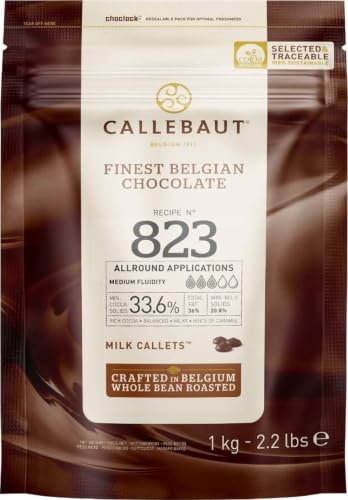
Callebaut No. 823 Finest Belgian Milk Chocolate Callets, 1 kg
$47.91A genuine milk couverture rather than a supermarket eating bar, which matters because the published milk ganache ratio, roughly twice the chocolate of dark, assumes couverture behavior and a candy-aisle bar will not set the same way.
Best for: milk chocolate ganache and drips that actually set
Check price on AmazonAmazon prices move often, so check before you buy.
What chocolate is worth the extra cost?
Past the reference couverture, the reason to spend more is flavor character, not performance. A 70 percent Grand Cru bean sets harder and tastes more bitter than a 54 percent bag at the same ratio, and that difference is the entire point of buying it.
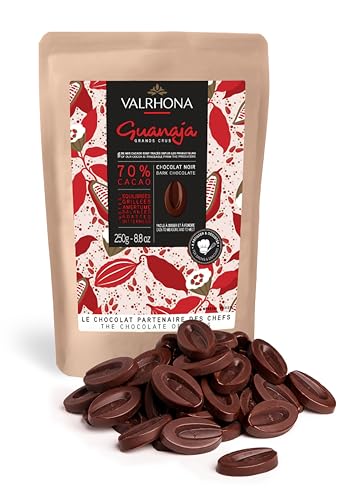
Valrhona Guanaja 70 Percent Dark Chocolate Feves
$43.99At a stated 70 percent cocoa this sets noticeably firmer than a 54 percent couverture at the same chocolate-to-cream ratio, so a ganache recipe written for a lower percentage needs more cream if you swap to this bag.
Best for: a more bitter, firmer ganache and a flagship truffle centre
Check price on AmazonAmazon prices move often, so check before you buy.
Who should not buy this
Not for anyone still learning the ganache ratio, or making a single batch of drip for one cake. The 70 percent cocoa content means a recipe written for a standard 54 to 60 percent couverture will set too firm at the same ratio, which is a frustrating way to learn, and the price premium over the Callebaut 811 buys flavor character rather than anything a beginner will notice yet.
How do these couvertures compare?
| Chocolate | Type | Cocoa | Ganache ratio for a drip | Price |
|---|---|---|---|---|
| Callebaut No. 811 | Dark | 54.5% | 1:1 chocolate to cream | $44.85 |
| Guittard Organic 66% | Dark | 66% | 1:1 chocolate to cream | $23.56 |
| Valrhona Guanaja | Dark | 70% | 1:1 chocolate to cream, sets firmer | $43.99 |
| Valrhona Caraibe | Dark | sold as 66% Grand Cru | 1:1 chocolate to cream | $31.89 |
| Callebaut No. 823 | Milk | not stated by the maker | 2:1 chocolate to cream | $47.91 |
| Valrhona Jivara | Milk | 40% | 2:1 chocolate to cream | $37.99 |
| Ghirardelli Dark Wafers | Dark | not stated by the maker | 1:1 chocolate to cream | $79.95 for 5 lb |
How we chose
Every pick here comes from published couverture manufacturer specifications: stated cocoa percentage, the melting and working temperature ranges printed on the bag, and the ganache ratios those manufacturers themselves publish. Owner reviews were read for consensus on how a couverture actually melts and pours, not for a rating average. Nothing here was melted, tempered or piped in person for this page, and no claim above states or implies otherwise.
Buying tips
Buy by weight, not by piece count, since the ganache ratio is a weight ratio and a kitchen scale is the only tool that reads it correctly. Callets and wafers melt more evenly than a chopped bar because the pieces are a consistent size, which matters more for tempering than for ganache, since a lumpy melt can hold pockets of untempered chocolate.
Working temperature ranges differ by chocolate type: dark couverture typically melts around 115 to 120 F and works at 88 to 90 F, milk runs about 5 degrees cooler at every stage, and white runs cooler again, closer to 84 to 86 F for working. Run the chocolate tempering calculator for the full published range on the type you are using, and treat the bag's own printed numbers as the final word over any chart, since manufacturers formulate their own couvertures slightly differently.
Buy the smallest bag that answers the question you are actually asking. A 12 ounce test bag is the right unit for finding out whether a ratio or a brand suits you; a 2.5 kg bag is the right unit once you already know, because tempering a larger batch is genuinely easier to hold in temper than a small one.
Store couverture cool, dry and wrapped, away from strong smells, since chocolate absorbs odor from anything nearby in the pantry. A dusty grey surface on a stored bar is fat bloom, cocoa butter that has separated and recrystallized on the surface after a temperature swing, and it is a storage problem rather than a spoilage one: the chocolate is still safe to melt and use, it simply will not hold its own temper as reliably on the next attempt. A gritty, sugary-looking bloom is different, caused by moisture reaching the surface, and is the sign to buy a fresh bag rather than fight the batch you have.
A few things worth knowing before any of this leaves the kitchen. Anything filled or coated with whipped cream or cream cheese needs refrigeration, and buttercream softens in a warm room long before it is unsafe, which is a structural problem rather than a health one. A ganache made soft, with more cream in it, is far less stable sitting out than a firm dark ganache made mostly of chocolate. Ask about allergies before you bake for other people, since cross contact happens at the mixing bowl rather than the table, and if you are selling rather than giving cakes away, that is governed by your state cottage food law, which varies a great deal.
What this job actually needs
Callebaut No. 811 Finest Belgian Dark Chocolate Callets, 1 kg
$44.85The reference dark couverture at about 54 percent, in callets that melt evenly, which is what the published tempering ranges on this site assume.
Best for: ganache, tempering and drips
Check price on AmazonAmazon prices move often, so check before you buy.
Guittard Organic 66 Percent Chocolate Baking Wafers, 12 oz
$23.56A 12 ounce bag is the right size to try a ganache ratio without committing to a kilo, from an American maker with a long couverture line.
Best for: testing a ganache ratio before buying bulk
Check price on AmazonAmazon prices move often, so check before you buy.
Valrhona Guanaja 70 Percent Dark Chocolate Feves
$43.99At 70 percent it sets harder for the same cream than a 54 percent does, so a ganache recipe written for Callebaut 811 needs more cream if you swap to this.
Best for: firm ganache and a more bitter finish
Check price on AmazonAmazon prices move often, so check before you buy.
Questions people ask
- Why does milk chocolate need twice as much chocolate as dark for the same ganache?
- Because cocoa solids and cocoa butter are what make a ganache set, and milk chocolate carries less of both than dark does, with milk solids and sugar taking their place. To reach the same firmness a milk ganache needs roughly two parts chocolate to one part cream, against dark's roughly even ratio, and this is a published couverture manufacturer figure rather than a preference.
- Can I use chocolate chips instead of couverture for ganache?
- You can, but the result is softer and less glossy, because chocolate chips are formulated to hold their shape when baked rather than to melt smoothly, and many contain stabilizers in place of some cocoa butter. A couverture like Callebaut or Valrhona melts into a smoother, more pourable ganache and tempers properly, while chips generally do not temper at all.
- What is the difference between Callebaut and Valrhona for ganache?
- Mostly cocoa percentage and flavor character rather than performance. Callebaut No. 811 sits at a stated 54.5 percent and behaves as the reference couverture most published ratios assume. Valrhona's Guanaja and Caraibe run higher in cocoa and read more bitter, so a ganache made with them at the same ratio sets firmer and tastes less sweet.
- Does white chocolate really need three times as much as dark?
- Roughly, yes, and the reason is structural. White chocolate has no cocoa solids at all, only cocoa butter, sugar and milk solids, so it has nothing in it that sets the way dark or milk chocolate's cocoa solids do. The published ratio for a white ganache is close to three parts chocolate to one part cream where dark uses closer to one to one.
- How much cream do I need for 400 grams of dark chocolate ganache?
- For a drip consistency, about 400 grams of cream, since dark couverture at a drip firmness runs close to a one to one ratio by weight. A firmer ganache for truffle centres uses less cream, closer to 200 grams for the same 400 grams of chocolate, and a pourable glaze uses more, around 800 grams. The exact figure depends on which of these five jobs you are making the ganache for.
Related pages
How this page was put together
Researched from pan geometry, published manufacturer capacities, published serving conventions and university extension guidance. Not hands-on testing, and not professional advice.
Figures are labelled as derived, published or trade convention. Where no honest figure exists, the page says so rather than filling the gap.